mifare classic card
December 21, 2025
mifare classic card proposal! mifare classic card official support.GOV,mifare classic card active!
<h1>MIFARE Classic Card: A Comprehensive Overview</h1>
<p><strong>MIFARE Classic card</strong> technology has been a cornerstone of contactless access control and payment systems for decades. In my personal experience working with RFID systems, I've found the MIFARE Classic to be remarkably straightforward to implement for basic applications, though its security limitations are now well-known. My skill in prototyping led me to use these cards extensively in early-stage building access models before transitioning to more secure options.</p>
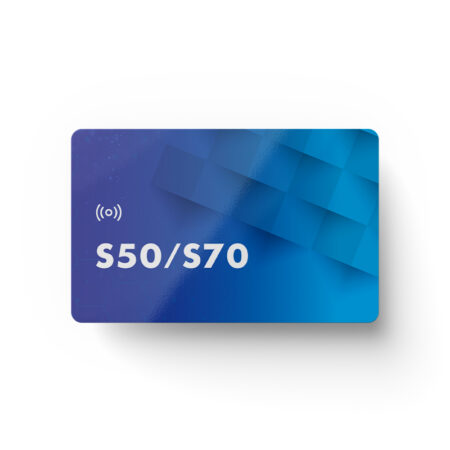 <h2>Technical Specifications and Detailed Parameters</h2>
 <p>Here are the key technical indicators and detailed parameters for a typical MIFARE Classic 1K card. Please note: <em>These technical parameters are for reference data; specifics need to contact backend management.</em></p>
<h3>Memory & Chip Architecture</h3>
<p>Here are the key technical indicators and detailed parameters for a typical MIFARE Classic 1K card. Please note: <em>These technical parameters are for reference data; specifics need to contact backend management.</em></p>
<h3>Memory & Chip Architecture</h3>
 <ul>
<li><strong>Chip Code:</strong> NXP MF1 IC S50</li>
<li><strong>Memory:</strong> 1 KB EEPROM, organized into 16 sectors.</li>
<li><strong>Sector Structure:</strong> Each sector contains 4 blocks (16 bytes per block). The last block of each sector is the Sector Trailer, storing two secret keys (Key A and Key B) and access bits.</li>
<li><strong>Communication:</strong> ISO/IEC 14443 Type A, 13.56 MHz.</li>
<li><strong>Data Retention:</strong> Up to 10 years.</li>
<li><strong>Write Endurance:</strong> 100,000 cycles minimum.</li>
</ul>
<h3>Physical Dimensions & Details</h3>
<ul>
<ul>
<li><strong>Chip Code:</strong> NXP MF1 IC S50</li>
<li><strong>Memory:</strong> 1 KB EEPROM, organized into 16 sectors.</li>
<li><strong>Sector Structure:</strong> Each sector contains 4 blocks (16 bytes per block). The last block of each sector is the Sector Trailer, storing two secret keys (Key A and Key B) and access bits.</li>
<li><strong>Communication:</strong> ISO/IEC 14443 Type A, 13.56 MHz.</li>
<li><strong>Data Retention:</strong> Up to 10 years.</li>
<li><strong>Write Endurance:</strong> 100,000 cycles minimum.</li>
</ul>
<h3>Physical Dimensions & Details</h3>
<ul>
 <li><strong>Standard Size:</strong> ID-1 format as per ISO/IEC 7810 (85.60 mm × 53.98 mm × 0.76 mm).</li>
<li><strong>Chip Module Dimensions:</strong> Typically ~5mm x 5mm, embedded within the card.</li>
<li><strong>Operating Distance:</strong> Up to 10 cm, depending on the reader antenna.</li>
</ul>
<p>I hold the opinion that while these specs made it revolutionary, understanding its cryptographic weakness (the Crypto-1 stream cipher) is crucial for any professional in the field today.</p>
<h2>Entertainment and Charitable Applicatio
<li><strong>Standard Size:</strong> ID-1 format as per ISO/IEC 7810 (85.60 mm × 53.98 mm × 0.76 mm).</li>
<li><strong>Chip Module Dimensions:</strong> Typically ~5mm x 5mm, embedded within the card.</li>
<li><strong>Operating Distance:</strong> Up to 10 cm, depending on the reader antenna.</li>
</ul>
<p>I hold the opinion that while these specs made it revolutionary, understanding its cryptographic weakness (the Crypto-1 stream cipher) is crucial for any professional in the field today.</p>
<h2>Entertainment and Charitable Applicatio
The Use of RFID for Human Identity Verification
<h2>Technical Specifications and Detailed Parameters</h2>
<p>Here are the key technical indicators and detailed parameters for a typical MIFARE Classic 1K card. Please note: <em>These technical parameters are for reference data; specifics need to contact backend management.</em></p>
<h3>Memory & Chip Architecture</h3>
<ul>
<li><strong>Chip Code:</strong> NXP MF1 IC S50</li>
<li><strong>Memory:</strong> 1 KB EEPROM, organized into 16 sectors.</li>
<li><strong>Sector Structure:</strong> Each sector contains 4 blocks (16 bytes per block). The last block of each sector is the Sector Trailer, storing two secret keys (Key A and Key B) and access bits.</li>
<li><strong>Communication:</strong> ISO/IEC 14443 Type A, 13.56 MHz.</li>
<li><strong>Data Retention:</strong> Up to 10 years.</li>
<li><strong>Write Endurance:</strong> 100,000 cycles minimum.</li>
</ul>
<h3>Physical Dimensions & Details</h3>
<ul>
<li><strong>Standard Size:</strong> ID-1 format as per ISO/IEC 7810 (85.60 mm × 53.98 mm × 0.76 mm).</li>
<li><strong>Chip Module Dimensions:</strong> Typically ~5mm x 5mm, embedded within the card.</li>
<li><strong>Operating Distance:</strong> Up to 10 cm, depending on the reader antenna.</li>
</ul>
<p>I hold the opinion that while these specs made it revolutionary, understanding its cryptographic weakness (the Crypto-1 stream cipher) is crucial for any professional in the field today.</p>
<h2>Entertainment and Charitable ApplicatioPhone: +86 19925232774
Hours: Mon-Fri 9:00AM - 6:30PM